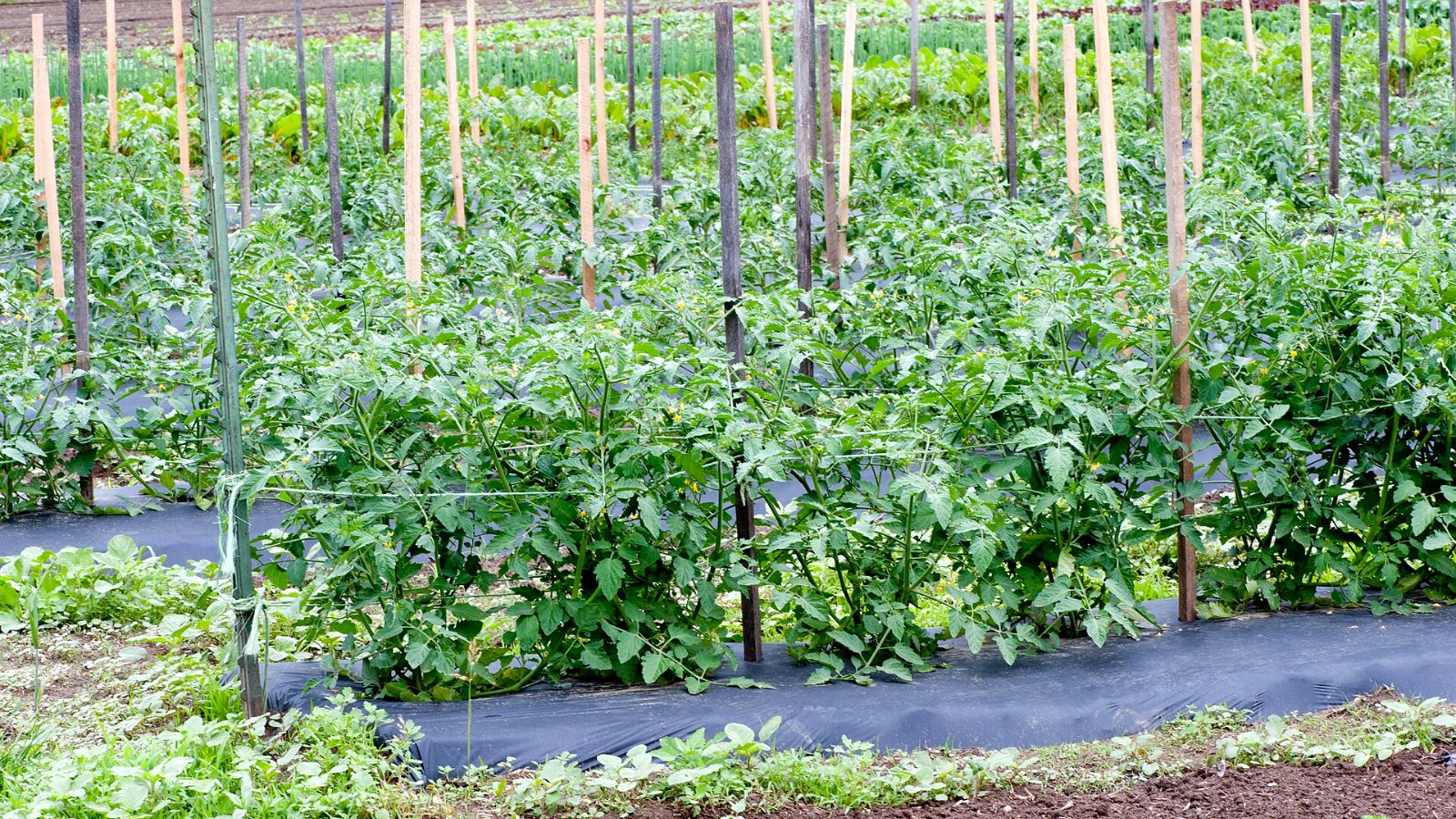
Cordon (indeterminate) tomatoes need a support 1.8 to 2.4 m (6 to 8 ft) tall put in at planting, the main stem tied loosely every 25 to 30 cm as it grows, and side shoots pinched out weekly. Bush (determinate) tomatoes need only a 1 to 1.2 m cage and no pinching. Put the stake in before the plant, not after, or you spear the roots; a stake driven 30 cm into the ground holds a full plant carrying 5 kg of fruit, a bamboo cane pushed in 10 cm does not.
Tomato support options
| Method | Suits | Height | Cost and notes |
|---|---|---|---|
| Single stake and ties | Cordon types, 1 to 2 stems | 1.8 to 2.4 m, 30 cm in the ground | Cheapest; tie with soft twine in a figure of eight every 25 to 30 cm |
| String from an overhead wire | Cordons in a greenhouse or under a frame | 2 m | Wind the stem round the string weekly; no ties needed |
| Cage, heavy gauge | Bush types and compact cordons | 1 to 1.5 m | Shop cages are usually too small; concrete reinforcing mesh cut to 1.5 m makes a cage that lasts years |
| Florida weave (stakes every 2 plants, twine both sides) | Rows of 6 or more plants | 1.5 to 1.8 m | Fastest for many plants; add a run of twine every 20 cm of growth |
| Spiral steel stake | Cordons, 1 stem | 1.8 m | No ties; stem winds through the spiral; reusable |
Remove the lower leaves up to the first fruit truss once it sets to improve airflow and cut blight risk, and stop the main stem two leaves above the top truss about 6 weeks before your first frost so the plant ripens what it has. Watering through drip irrigation keeps the fruit from splitting. Vertical cucumbers share the same trellis the following year.
First, know which type you have
Determinate varieties grow to a set height, around 1 to 1.2 metres, set most of their fruit in a short window and stop. They need moderate support – a cage or a single short stake.
Indeterminate varieties keep growing until frost, reaching two to three metres, and crop continuously. They need tall, strong support and ongoing tying in.
Check the seed packet or plant label. Getting this wrong is the usual reason a support fails in August.
Single stake and tie
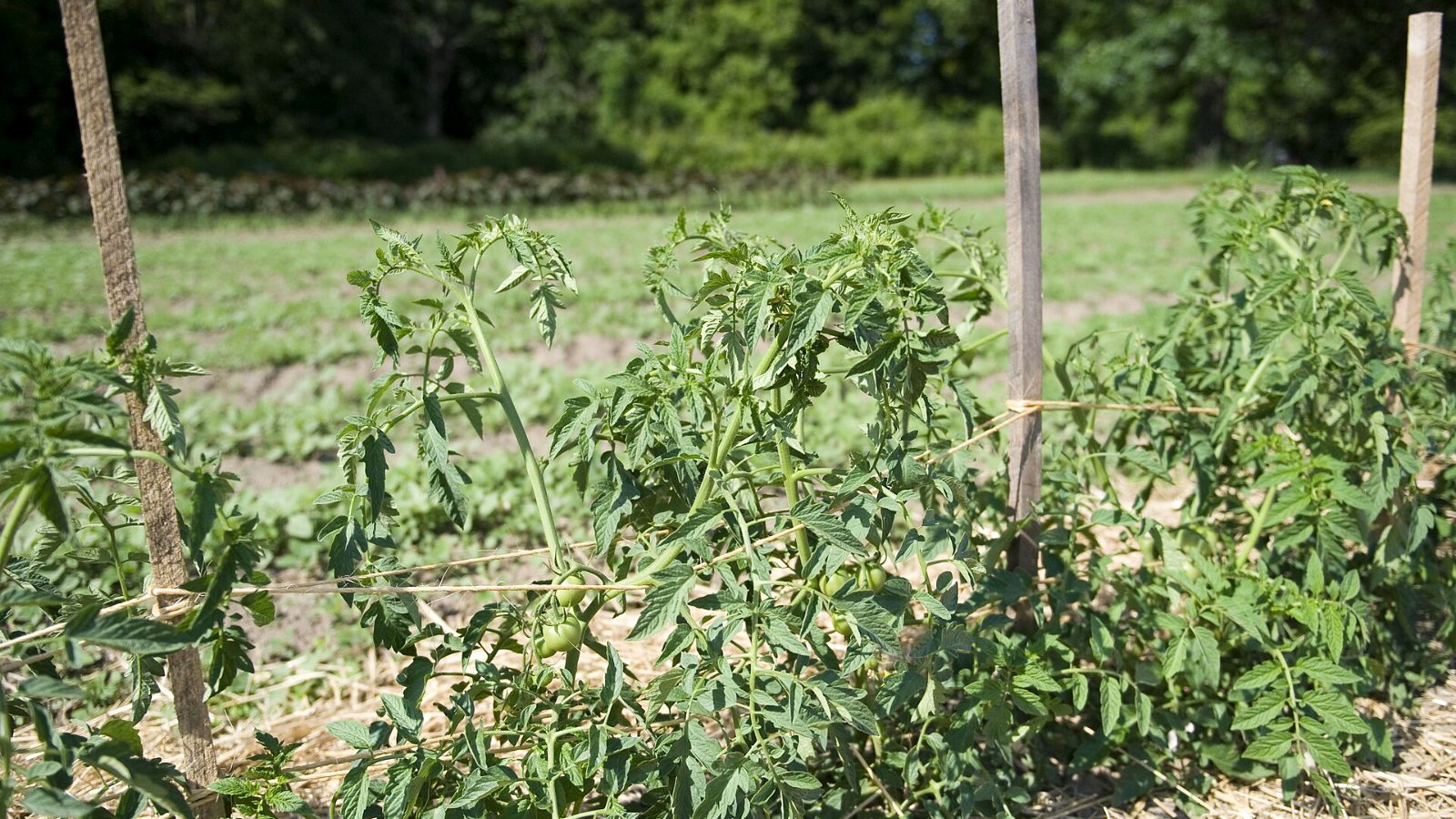
The simplest method: a 2.4 metre stake driven 45 cm into the ground, placed at planting time so you do not sever roots later. Tie the stem loosely every 20 to 25 cm with soft twine in a figure of eight, leaving room for the stem to thicken. Best for indeterminate tomatoes grown as a single stem with side shoots pinched out.
Cages
A cage supports the plant from all sides without tying. Shop-bought conical cages are usually too small and too flimsy for anything but determinate varieties. A far better option is a cylinder of concrete reinforcing mesh, 45 to 50 cm in diameter and 1.5 metres tall, anchored with a stake. The mesh openings are wide enough to reach through and pick.
String training
In a greenhouse or polytunnel, run a horizontal wire overhead and drop a string to each plant, anchored under the root ball at planting or tied to a short stake. As the plant grows, twist the stem gently around the string once a week. It is clean, cheap and ideal for long-season indeterminate plants.
The Florida weave
For a row of plants, drive a stake every two or three plants and weave twine along one side of the row and back along the other, sandwiching the stems. Add a new level of twine every 20 cm as plants grow. It is quick, uses little material and suits determinate tomatoes grown in quantity.
Set support before you need it
Install stakes, cages or strings at transplanting time. Driving a stake next to a six-week-old plant damages roots, and a plant that has already flopped rarely stands up straight again. The same applies to cages – slipping one over a small plant takes a second and is impossible once the plant is a metre wide.
Pruning works with support, not instead of it
For staked indeterminate plants, pinch out side shoots in the leaf axils weekly so the plant runs as one or two main stems. This improves airflow and fruit size. Caged plants can be left bushier. Remove the lowest leaves up to the first fruit truss once the plant is established – they contribute little and are the entry point for soil-splashed disease.
Materials that last
Soft jute or cotton twine, strips of old T-shirt or purpose-made plant ties all work; thin wire and cable ties cut into stems as they swell. Hardwood or metal stakes outlast bamboo, which tends to snap in its second season just as plants reach full weight. Whatever you use, check ties every couple of weeks and loosen anything that is biting in.
End of season
Clean and dry stakes and cages before storing, and scrub anything that supported a blighted plant with hot soapy water. Spores overwinter on surfaces, and reusing contaminated supports is an easy way to start next season with the same problem.
Maintenance After the Support Goes In
Support is not a one-day job. Indeterminate plants add 30 cm a week in high summer, so tie-in is a weekly task: loose figure-eight ties every 25 to 30 cm, always with soft material, because string under tension cuts into swelling stems. Pair tying with pruning: a single-stemmed, stake-trained plant needs its side shoots pinched weekly, while caged plants can keep two or three leaders but still want their lowest leaves lifted off the soil. The weekly visit is also when disease gets caught early, which beats any spray program; see the full routine in our tomato growing guide.
What about wind?
Wind failure happens at the base, not the top. Drive stakes 30 cm deep, anchor cage bottoms with ground staples, and in exposed gardens run a low windbreak on the prevailing side. A loaded tomato plant in August is a sail, and one storm can undo a season; gardeners on slopes and terraces learn this first.
Featured image: Tomato Support (). Photo: Dwight Sipler from Stow, MA, USA (CC BY 2.0), via Wikimedia Commons.
When this advice does not apply
Trailing and tumbling tomatoes are bred for baskets and need no support at all. In very windy gardens, cages protect better than single stakes, which act as a lever and snap the stem at the tie.


